
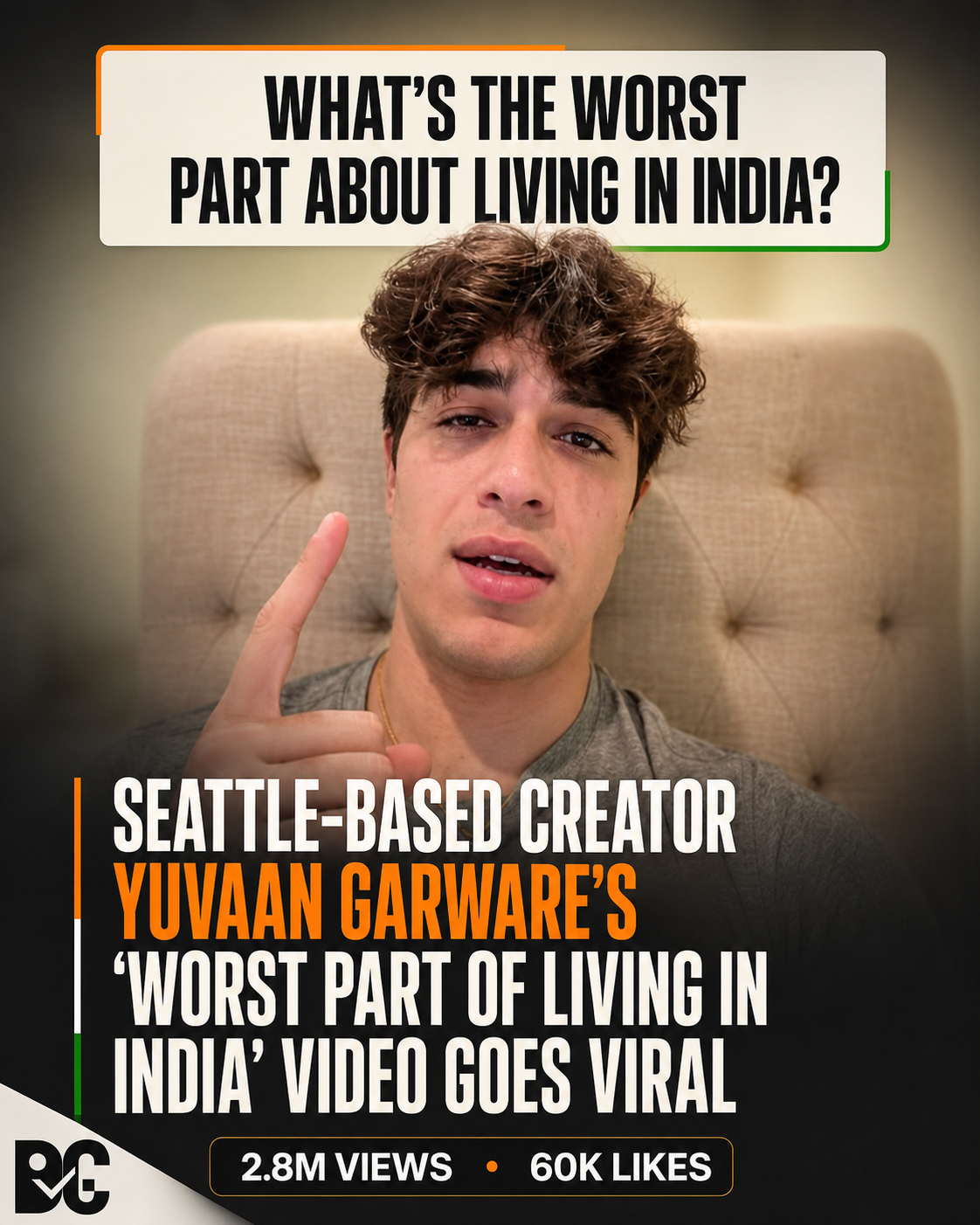
Using a deliberately negative opening, Garware highlighted India’s affordable healthcare, quick deliveries and community culture. The Instagram Reel has also attracted more than 60,000 likes.
Seattle-based content creator Yuvaan Ibañez Garware has gone viral after sharing a sarcastic video about the supposed disadvantages of living in India.
Garware begins the Reel with the question, “What’s the worst part about living in India?” What follows, however, is not a list of complaints. Instead, he uses irony to praise three aspects of Indian life that stood out during the 16 years he spent in the country.
The original Instagram Reel has crossed 2.8 million views and received more than 60,000 likes, at the time of writing.
Healthcare costs surprise the creator
The first subject Garware addresses is healthcare. He describes the combination of quality and affordability as one of India’s biggest advantages.
To illustrate his point, Garware says he underwent an MRI, an X-ray and blood tests for a combined cost of less than $100. His sarcastic complaint is that the treatment was so inexpensive that he did not know what to do with the money he had left.
The observation is framed through his personal experience rather than as a wider assessment of India’s healthcare system. Medical costs and access can differ considerably based on the hospital, city, treatment and a patient’s financial circumstances.
Still, his comparison resonated with viewers familiar with the significantly higher prices associated with diagnostic tests and medical treatment in the United States.
India’s delivery speed changes expectations
Garware next turns his attention to India’s quick-commerce ecosystem.
He highlights how consumers in several Indian cities can order groceries and household essentials through an app and have them delivered within minutes. For someone accustomed to this convenience, the creator suggests, same-day delivery in the US no longer feels particularly fast.
Quick-commerce platforms have made rapid deliveries a routine part of life for many urban consumers in India. Garware’s reaction shows how quickly such services can reshape customer expectations, especially when users move between countries with different delivery infrastructures.
Community becomes the third ‘problem’
The third supposed disadvantage mentioned in the video is India’s strong sense of community.
Garware contrasts his experiences in India with life in Western cities, where people can live near one another for years without forming close relationships. In India, he says, a conversation with someone can quickly lead to introductions to their wider family and invitations to social occasions.
His comments portray India as a place where personal relationships can develop quickly and social circles frequently extend beyond immediate friends and relatives.
While some people may prefer the privacy associated with life in other countries, Garware presents India’s openness and community culture as something he values.
A negative hook carrying a positive message
A major reason for the Reel’s reach appears to be the way Garware structured it.
The opening creates the expectation that viewers are about to hear criticism of India. The creator then reverses that expectation by presenting each supposed complaint as a compliment.
This contrast gives the video an immediate hook while leaving viewers with a positive message. It also encourages people to respond with their own experiences of living in India or abroad.
The format demonstrates how creators can use familiar negative framing without making the final content hostile or divisive. In Garware’s case, the provocative question attracted attention, while the unexpected praise kept viewers watching and discussing the video.
With more than 2.8 million views and 60,000 likes, the Reel has travelled far beyond the creator’s existing audience. It has also turned everyday subjects such as medical bills, grocery deliveries and conversations with neighbours into a wider discussion about what makes life in India distinctive.