
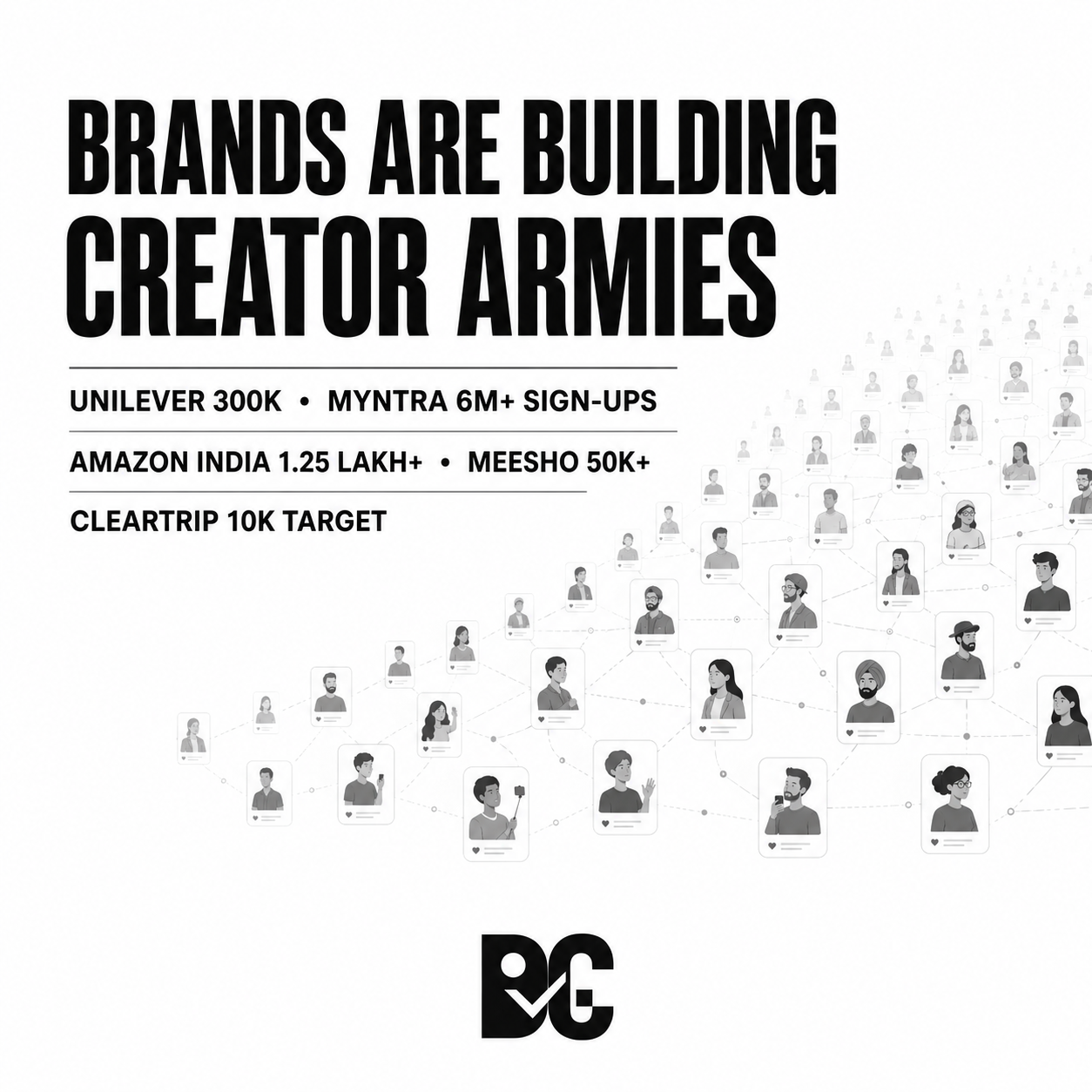
Influencer marketing is moving beyond celebrity endorsements and one-off sponsored posts. Some of the world’s biggest companies are now building large creator ecosystems that can produce content, influence buying decisions and directly generate sales.
Unilever has expanded its global network to nearly 300,000 creators as part of its social-first marketing strategy. However, this represents a broader ecosystem of paid and earned creators, not 300,000 people under direct contracts. Unilever
In India, the shift is becoming particularly visible across e-commerce and travel.
Myntra’s Ultimate Glam Clan has crossed six million sign-ups. More than 500,000 creators are active every month, while over 100,000 nano and micro creators reportedly earn through content and affiliate commissions. Creator-led commerce already contributes close to 10% of Myntra’s revenue. Social Samosa
Amazon India’s Influencer Program works with more than 1.25 lakh creators across categories such as fashion, technology, lifestyle and fitness. Creators can recommend products through personalised storefronts, shopping videos and affiliate links while earning commissions from qualifying purchases. Economic Times
Meesho Creator Club says more than 50,000 creators are earning through its programme by promoting products and receiving commissions on sales. Meesho Creator Club
Cleartrip, meanwhile, aims to onboard more than 10,000 creators by the end of 2026. Its Creators Club does not require a minimum follower count or offer fixed payments for posts. Creators earn when their content generates confirmed travel bookings. Cleartrip Creators Club
What is changing?
The creator is no longer being treated only as a media channel. Creators are increasingly becoming affiliate partners, product-discovery engines and commission-based salespeople.
This changes influencer marketing in four major ways:
Follower count is becoming less important than the ability to drive action.
Fixed campaign fees are being replaced or supplemented by performance-based commissions.
Nano, regional and everyday creators can participate without agency representation.
Brands can track content directly to bookings, purchases and revenue.
Agencies will not disappear, but their role will change. Brands will increasingly need them for strategy, technology, creator management and quality control, rather than simply identifying influencers and negotiating individual posts.
The next phase of the creator economy may therefore be less about a few influencers earning large sponsorship fees and more about millions of people earning smaller commissions by influencing what their communities buy.
Creators are becoming the new distributed sales force of the internet.